
Start with how the room needs to work and what you are keeping. Make a measured plan, decide the changes that matter most and set a budget for preparation as well as finishes. Choose permanent surfaces and larger items before the smaller decorative details.
What the discussion actually asks
Readers of the Starting Fresh thread ask how to reuse furniture in a traditional home, judge scale when shopping online, decide whether a matching package is worth buying and choose a mirror above a fireplace. Other replies describe the pressure to finish every room at once. These are practical decisions, not reasons to buy a whole new scheme.
The guides linked below turn those questions into steps you can use: keep an inventory, measure before buying, check what a mirror reflects and choose a connection between pieces. They are original editorial answers, not a claimed consensus of Reddit commenters.
Write a brief for the way you actually live
Before saving another room photograph, write down what is not working. You may need somewhere to work, better storage, a calmer colour scheme or simply a finish that is easier to maintain. Choose two or three priorities so the project has a purpose beyond copying a style.
Look at when the room gets used and what light it receives. A space that looks bright at midday may feel very different in the evening. Take photographs from the main viewpoints and draw a simple plan with the door openings and furniture you intend to keep.
Separate what stays from what changes
List the flooring, sofa, cupboards, fittings and artwork that will remain. Those items already set part of the palette. Use a few reference images to identify the colours, proportions or textures you like, rather than treating the entire room as a shopping list.
Think about lighting and layout early. If the project includes work by an electrician, plumber or kitchen fitter, their decisions may need to happen before painting or tiling. A finished surface is not the right point to discover a socket needs moving.
Set a budget that includes the unglamorous work
Make separate allowances for preparation, finishes, furniture and smaller accessories. Then mark the items you would reduce if the total is too high. Retaining a sound floor or fitting can leave more room for the finish that makes the biggest difference to you.
Keep a contingency appropriate to the uncertainty of the project. If you have not yet seen what is behind old tiles or wallpaper, avoid spending the entire budget on the visible materials before the background has been assessed.
Make one small decision real
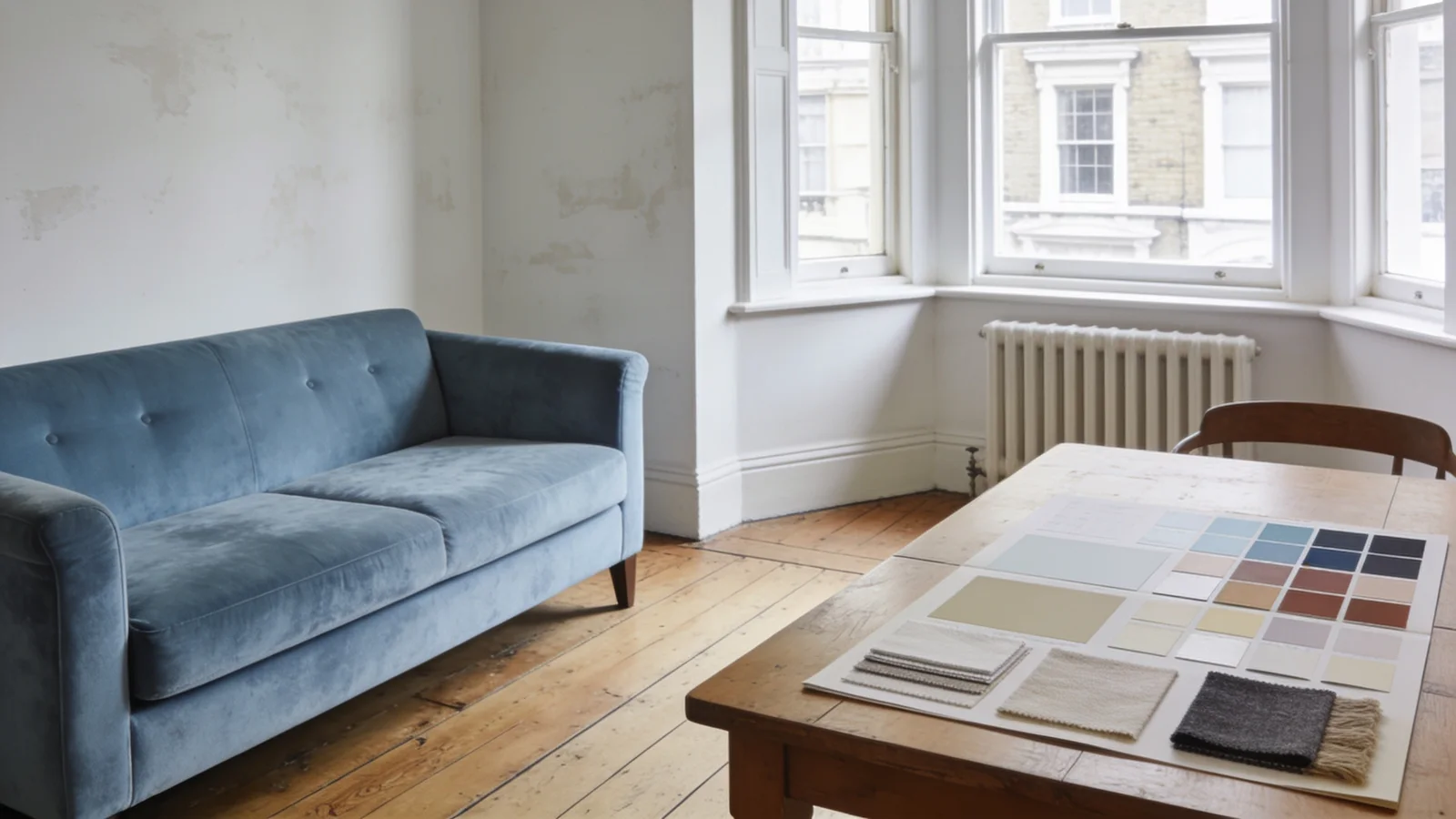
Choose one room or a clearly defined first phase. Try samples together in the actual space. Confirm the required work with your tradesperson, then write down the chosen products and the agreed scope so the decisions do not drift.
For a Walthamstow enquiry, send the room, its condition, your priorities and any timing constraints. A thoughtful brief is useful even if you have not selected the final colour.
Your planning checklist
- What the room must do
- What you are keeping
- Measurements and daylight
- Preparation and finish budget
- Product samples in the room
- Work sequence and responsibilities
Questions homeowners ask
Should I choose paint or furniture first?
If you are keeping major furniture or flooring, use it as a reference. If everything is changing, plan the larger and less flexible choices together, then test paint against them. There is no single rule for every room.
Do I need an interior design style before starting?
No. Start with the room’s function and the things you like. A consistent palette and a few repeated materials can guide decisions without a rigid style label.
How do I stop decorating becoming overwhelming?
Choose a single room or phase, limit your priorities and turn saved images into a short list of decisions. Test samples before buying and keep a written record of what is agreed.
Should I replace all my furniture to suit a new home?
Start with the pieces that are useful and that you enjoy. Measure their new positions and test paint colours beside them. Replace items that do not fit or serve a purpose; a style label alone is not a reason to discard everything.
Should I finish decorating every room at once?
Prioritise the rooms you need to use and any preparation that is easier before moving furniture in. Settle the larger layout and surface decisions first, then add accessories after living with the space.
Sources & further reading
Technical decisions should follow the actual product instructions. These references support the planning points above.
- Fifi McGee: planning a home designDesign planning, lighting and visual decisions.
The homeowner questions behind this guide
These real discussions helped shape the questions. Community replies are personal experiences and opinions, not a verified installation specification or price list.
- r/HomeDecorating: Starting Fresh 101Community discussion that informed our planning questions. Opinions are not technical evidence.