
Choose a few recurring colours, materials or details and let individual rooms adapt them to their function and light. A home can feel connected without using the same paint or tile everywhere. Style labels help describe preferences; they should not override how the space works for you.
Use style names as a starting vocabulary
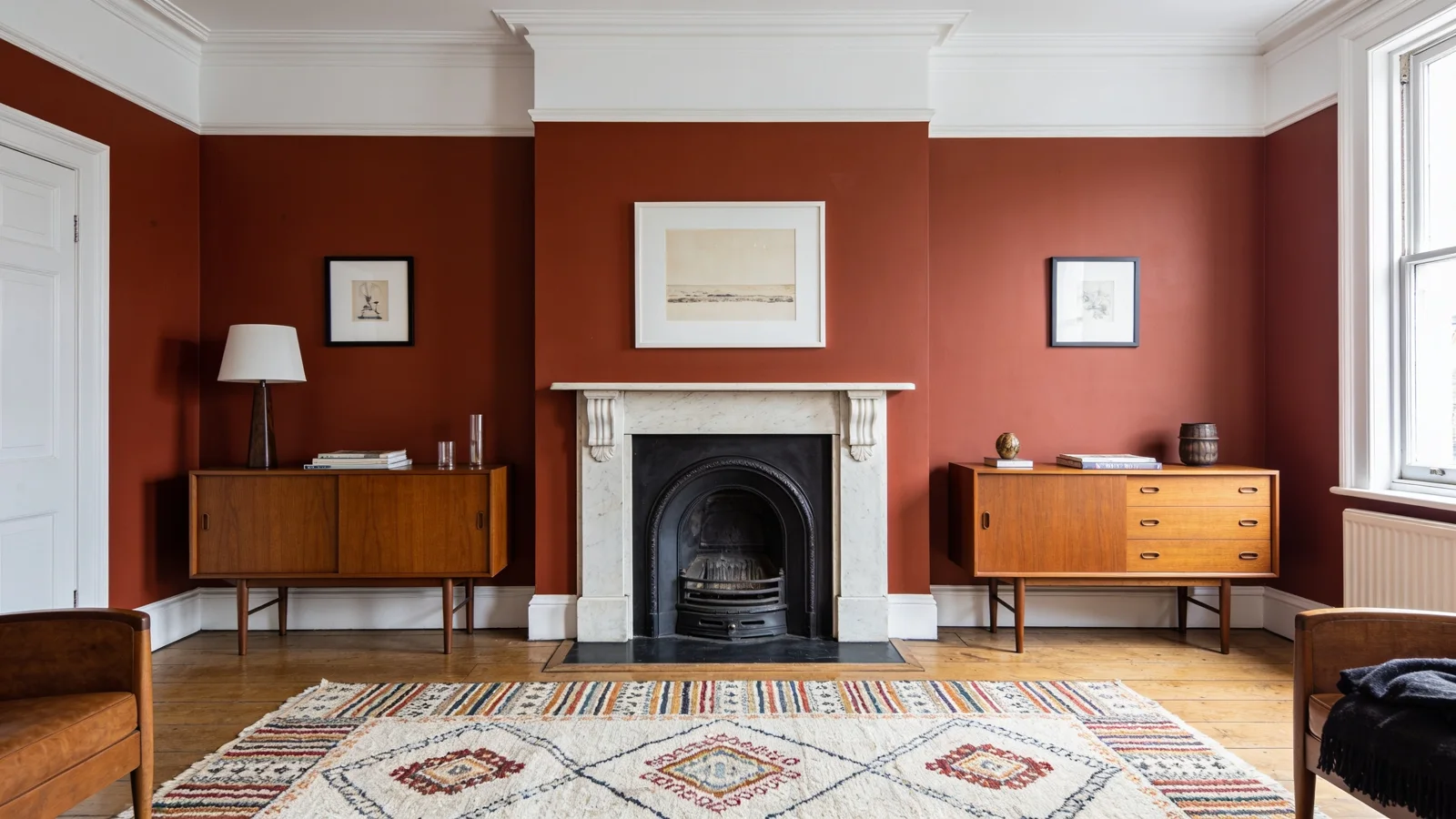
Modern, Scandinavian, traditional and eclectic are ways to describe a direction, not precise shopping specifications. Collect a few images and note the parts you like: a quiet wall colour, the relationship between timber and tile, or a particular contrast.
You may like elements from several styles. Decide which are worth repeating, rather than asking every item to prove that it belongs to the same label. The result can be more personal and easier to adapt over time.
Create a thread between the rooms
Choose a small set of recurring decisions. That might be the tone of the wood, a family of paint colours, the finish of visible metalwork or a repeated shape. Different rooms can use those elements in different proportions.
Look at the view from one room into another. Adjacent finishes are experienced together, even when they were chosen on separate days. Compare samples across that boundary before finalising either space.
Balance the permanent surfaces with the movable details
A tiled floor or kitchen splashback is harder to change than a cushion or a framed print. Give those permanent decisions enough time and compare them with what you are keeping. Try bolder ideas in a way that matches your appetite for future change.
A restrained background can support expressive furniture, while a strong wall or tile choice can become the focal point. Decide which element leads so the room does not contain several competing statements by accident.
Turn the inspiration into a job brief
For a painting or tiling enquiry, save the specific reference and explain what appeals to you. Include the actual room photos too. An example image communicates a mood; it does not show the condition or measurements of your home.
In Walthamstow and East London, the same principle works for a single-room update or a connected set of spaces: establish what stays, check samples in the room and agree the installation scope before buying.
A practical comparison
| Direction | A useful starting idea | A decision to test |
|---|---|---|
| Modern | Clear forms and restrained detail | Whether the room needs softness or contrast |
| Scandinavian | Light, practical arrangements and natural textures | How the palette behaves in your daylight |
| Traditional | Existing features and familiar proportions | Which original details should remain visible |
| Eclectic | A deliberate mix of periods and personal objects | Which colours or materials connect the mix |
Questions homeowners ask
Can different rooms have different styles?
Yes. Repeat a few colours, materials or details where you want continuity, and let each room respond to its use and light.
Must all the woodwork be the same colour?
No. It can be a connecting choice, but test how adjacent rooms and their doors are seen together. Record the final specification surface by surface.
How can I avoid copying an inspiration photo?
Identify the few features you like and adapt them to your room, furniture and budget. Use samples and actual measurements rather than trying to reproduce every object.
Sources & further reading
Technical decisions should follow the actual product instructions. These references support the planning points above.
- ABI Interiors: six interior design stylesStyle references for inspiration, not rules.
The homeowner questions behind this guide
These real discussions helped shape the questions. Community replies are personal experiences and opinions, not a verified installation specification or price list.
- r/HomeDecorating: Starting Fresh 101Community discussion that informed our planning questions. Opinions are not technical evidence.