
For an interior painting job, list each surface and its condition, test the colour in the actual room and agree preparation and materials in writing. Plan the work around room access and drying times rather than relying on a fixed promise of a one-day makeover.
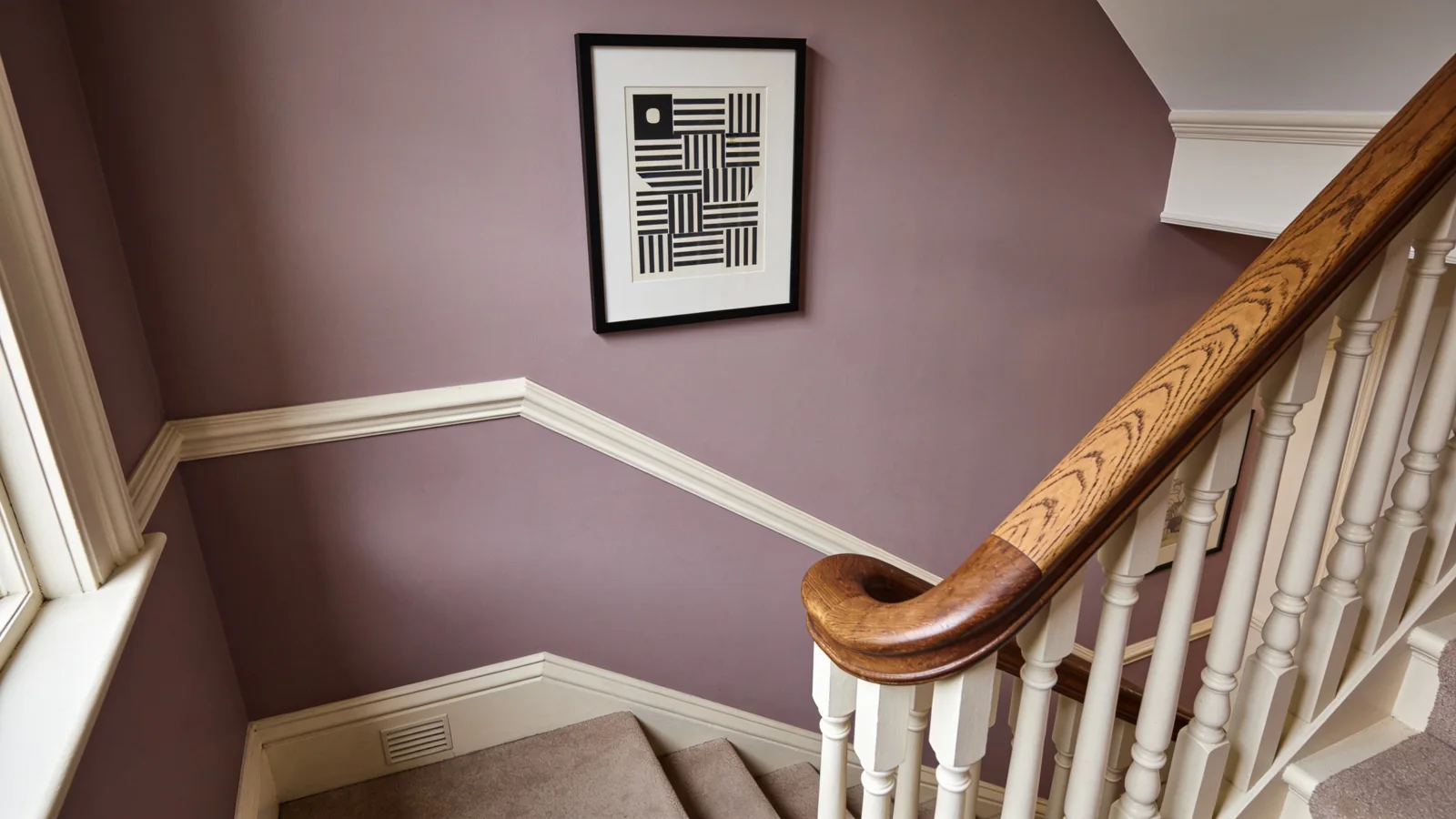
Walls, ceilings and woodwork need their own brief
A living room refresh may include three different finish decisions: the walls, the ceiling and the timber details. Make each one explicit. Leaving the ceiling out can be sensible, but it should be a conscious decision rather than an assumption.
Photograph the room in daylight and include the corners, window reveals and any damaged areas. Mention rooms with recent plastering or a history of damp. Decorating is the finishing stage, so the cause of recurring moisture should be addressed first.
Look at samples where they will live
A colour seen on a phone screen is only a starting point. Compare physical samples beside flooring, curtains and the largest items of furniture. Check the room during the day and with its usual evening lights on.
If you are keeping an existing sofa or floor, use that as a reference. You do not need to choose a rigid style label, but repeating a few tones between rooms can make the home feel more connected.
Plan for an occupied home
Tell us which spaces must stay accessible and where furniture can be moved. Agree how equipment and materials will be stored, and whether work can progress room by room.
Paint drying and full curing are different. Follow the selected product’s instructions before cleaning, attaching anything to the surface or returning items against newly finished walls. Ask for the product details at handover.
Questions homeowners ask
Should I paint the ceiling the same colour as the walls?
That is a design choice, not a universal rule. A continuous colour can soften visual breaks, while a lighter ceiling creates contrast. Test both ideas against the room’s daylight, proportions and existing furnishings.
Can I stay at home while a room is painted?
Discuss room access, ventilation, furniture and the selected products before booking. Whether it is practical depends on the work and the spaces that need to remain usable.
Can newly plastered walls be painted immediately?
Allow the plaster to dry and use the first-coat treatment recommended for the chosen paint system. Drying conditions vary; do not treat a fixed number of days as a guarantee.
Sources & further reading
Technical decisions should follow the actual product instructions. These references support the planning points above.
- Dulux: testing and sharing colour schemesTesting colours against the room and existing furnishings.
- Dulux: painting new plasterManufacturer guidance on drying and the first coat.