
Begin with furniture layout and clear routes through the room, then improve daylight and reduce distracting changes in colour. Test a light, tonal scheme if you want an airy feel; darker colours can also create depth. Decoration changes perception, not the actual floor area.
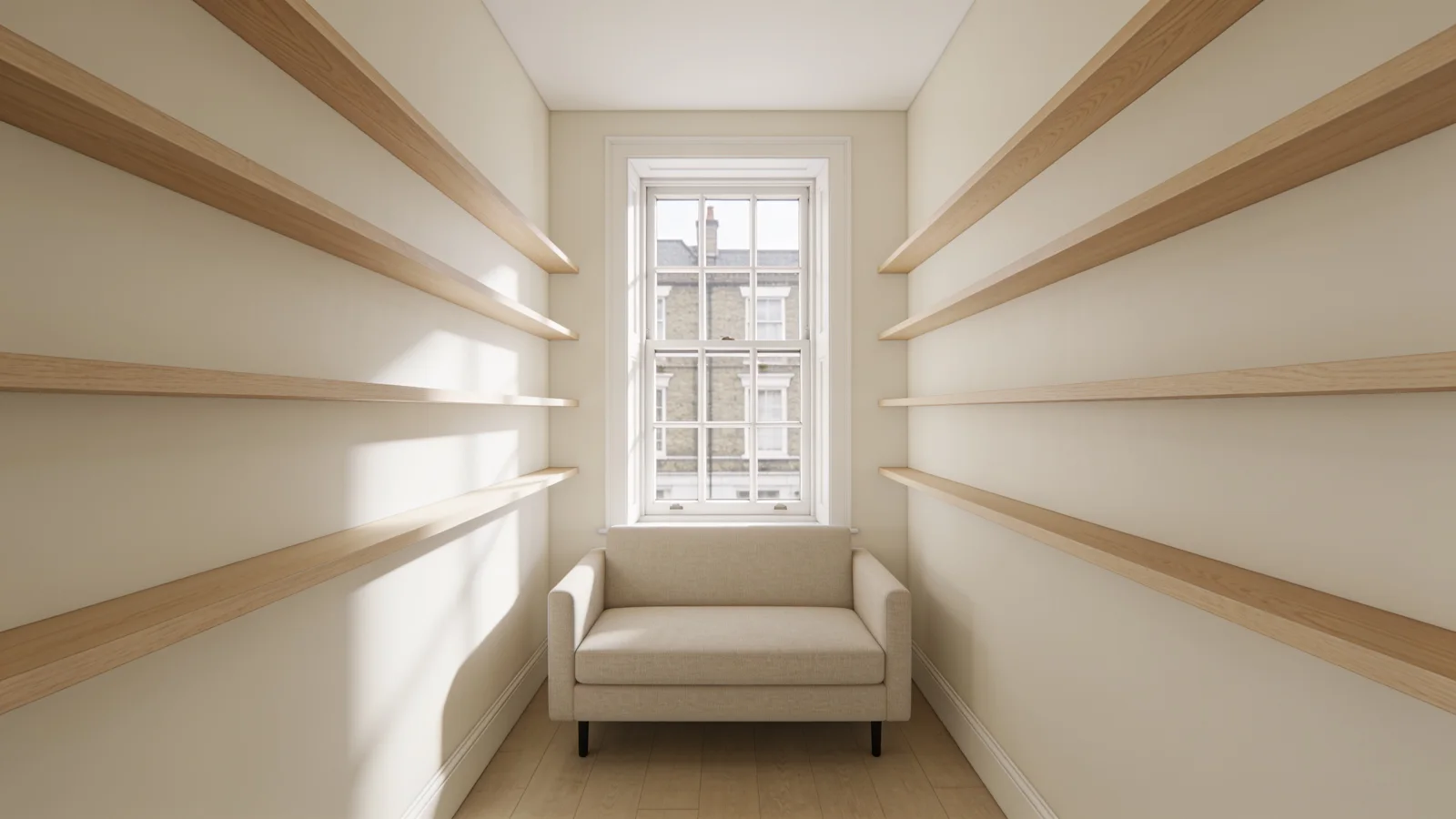
Find the pinch points before choosing a colour
Stand in the doorway and look at the route through the room. Is a chair blocking the path, or does the furniture leave several small unusable gaps? Moving one large item may improve the space more than adding several decorative pieces.
Measure the furniture you want to buy as well as the room. Mark its footprint with paper or tape and check that doors, drawers and seating still work. A compact room can feel generous when the arrangement is clear.
Make the existing light work harder
Keep the usable window area open and place task lighting where you need it. Avoid relying on one overhead light for every activity. You can test a rearrangement with lamps before committing to permanent changes.
Think about the room in the evening, too. A reflective surface or pale finish is only part of the picture; the direction and character of the light change how the walls feel. Test samples under the bulbs you actually use.
Choose continuity rather than a rule about white
A quieter relationship between walls, woodwork and large furniture can make the visual boundaries less busy. Light tones are one option, but depth and a deliberate darker scheme can also work. The useful question is how the room feels in its real light.
Do not assume a feature wall automatically makes a room bigger. It creates a focal point, which may be exactly what you want, but test whether it helps the layout or draws attention to an awkward boundary.
Finish the room with fewer competing decisions
Look for places where colours, patterns or changes of material compete. You can keep personality and still give the eye somewhere to rest. Group smaller objects rather than scattering them across every surface.
If your plan goes beyond decoration into removing walls or changing openings, it becomes a different kind of project. Get the appropriate assessment and permissions before treating structural work as a decorating shortcut.
Questions homeowners ask
Does painting a small room white always make it bigger?
No. White can help an airy scheme, but the result depends on light, layout and contrast. Test alternatives in the room rather than assuming one colour will solve a cramped arrangement.
Should I use large tiles in a small bathroom?
Tile size alone does not decide the result. Look at the whole layout, cuts, fittings and pattern. Use a scaled sketch or sample layout before choosing a size.
Can decoration create more floor space?
It can change the perception of openness. Rearranging or reducing furniture may free usable space, but paint and tile finishes do not change the room’s physical dimensions.
Sources & further reading
Technical decisions should follow the actual product instructions. These references support the planning points above.
- Dulux: making the most of small spacesColour, light and furniture ideas.
The homeowner questions behind this guide
These real discussions helped shape the questions. Community replies are personal experiences and opinions, not a verified installation specification or price list.
- r/HomeDecorating: Starting Fresh 101Community discussion that informed our planning questions. Opinions are not technical evidence.